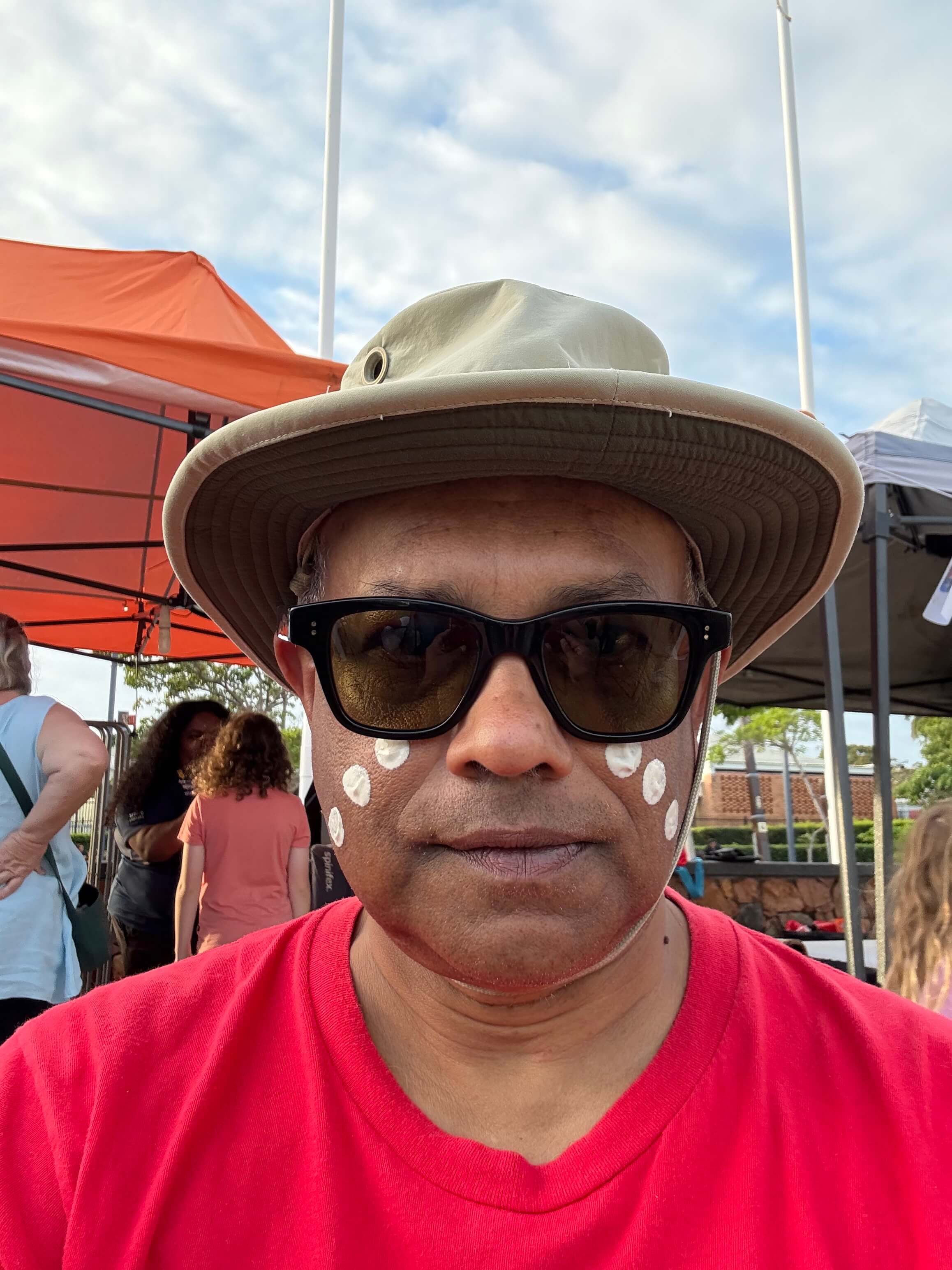


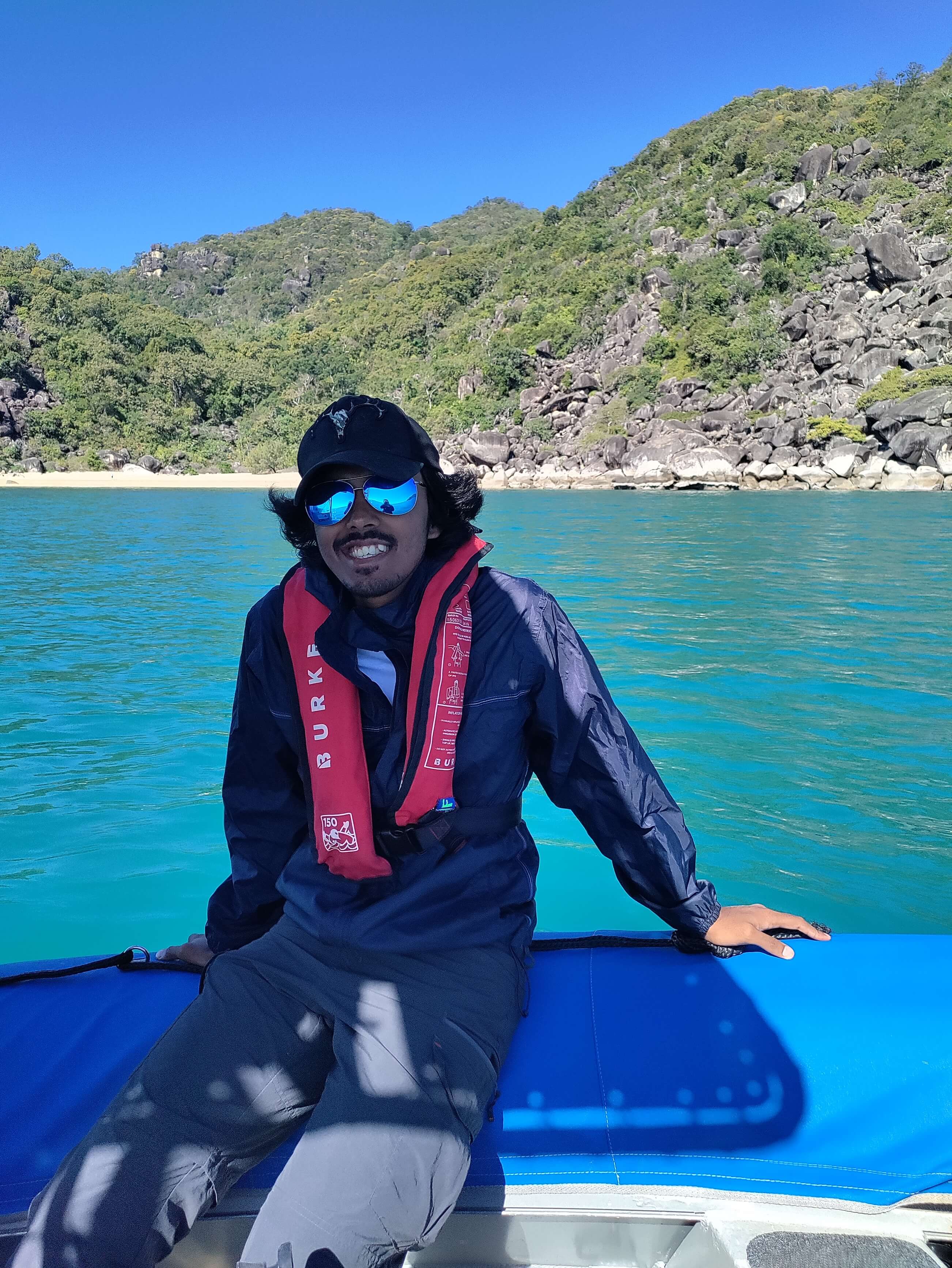
The continent of Australia presents a striking cartography, from expansive coastlines to a vast arid interior. Yet the visitors and contemporary migrant streams who traverse and document their travels through photographs of this terrain often overlook the historical and cultural geographies that have re-emerged with urgency in recent decades. During a sabbatical in Australia, the lead author encountered firsthand the layered struggles embedded in land, water, forests, animals, peoples, and communities shaped by the enduring legacies of colonization. These struggles include the protection of Indigenous people’s rights, recognition of the contributions of migrants and diasporic communities, promotion of sustainable tourism and public transit, and intersecting crises of biodiversity loss and climate change.
A sustained presence on location reveals not only Australia’s expansiveness and environmental diversity—from interior deserts to tropical rainforests—but also the social, environmental, and political questions inscribed within place. Travel in this essay was limited to a semester, primarily along the East Coast, from Cape Tribulation (Kulki1) where the Daintree Forest meets the Great Barrier Reef (GBR), to Melbourne (Naarm), with an additional visit to Perth (Boorlo). It involved engagement with: universities and agencies; Aboriginal and Torres Strait Islander peoples,2 including members of the Quandamooka, Gooreng Gooreng, and Yuggera nations; Australian South Sea Islanders; immigrants and international students; refugees and diasporic communities; working holiday visa holders; and tourists. The photographs and accompanying thematic discussion that follow emerge from these encounters, proposing a visual re-mapping of Australia’s cultural and environmental terrain.
Events the lead author participated in include university presentations, conferences, public events, festivals, religious services, and careful observations of information signs displayed at hostels, hotels, airports, public transit vehicles, and boat tours. Most events began with a meaningful acknowledgement of Country and the traditional custodians of the land. Even the information boards on hikes and audio guides in museums, such as the Discovery Center in the Daintree Rainforest, used Aboriginal and Torres Strait Islander terms and information.
The inclusions of First Peoples and their perspectives respectfully bring the past into the present; they preserve the history of the land and recognize the continuing connection of Aboriginal and Torres Strait Islander peoples to land, animals, plants, water, community, language, traditions, and more. An Australian Institute of Aboriginal and Torres Strait Islander Studies map of Indigenous Australia displayed prominently at universities and elsewhere is a visual reminder of the richness and diversity of Aboriginal and Torres Strait Islander peoples, including their clans, dialects or individual languages, and social or nation groups. Efforts at self-determination and redressing the past are ongoing and examples include the Queensland Museum Tropics in Townsville consulting with Traditional Custodians and repatriating ancestral and cultural material to Country and community.
It is refreshing to note that Australia is expanding public transit by leveraging diverse options, including bus, train, light rail, and an enviable ferry system in cities such as Sydney (Gadigal) and Brisbane (Meanjin). Continuous improvements to public transit infrastructure are designed to unclog streets, reduce reliance on cars, and expand existing transportation networks.
While Gadigal leads Australian cities offering 67 percent of its residents access to all-day public transport services near their homes, considerations such as affordability cannot be overlooked. To this end, public transport is capped at 50 cents all over the State of Queensland. The benefits are visible not just in cities such as Meanjin where one can travel from the city to the Gold Coast for 50 cents—a distance of approximately 80 kms—but cheap bus and train fares were available in other locations, such as Cairns and Magnetic Island (Yunbenun). However, while cheap fares are beneficial to visitors/tourists to some islands (for example, 50 cent fares on buses in Minjerribah and Yunbenun), the transportation needs of local residents on these islands receive less attention and support. The ferries to the islands—which are not considered public transit—have steep fares. A lack of grocery stores (or high schools) on islands, such as Minjerribah, can make travel for locals expensive and in some cases entirely unaffordable. Furthermore, public transit options are limited or unavailable in many locations beyond cities and tourist destinations.
Many individuals and communities embrace opportunities to organically grow flowers, fruits, vegetables, and herbs in their gardens and community spaces. For example, the Hawkesbury EarthCare Centre in Richmond, New South Wales is a volunteer community-run, non-profit space promoting sustainable living and regenerative practices of indigenous species. Communities learn and promote sustainable farming and soil conservation practices, including permaculture, microbe growth, composting, and pollination.
Australia embraces tourism by developing and maintaining an infrastructure of trails, roads, ocean routes, observation decks, lookouts, camping sites, and more enabling tourists to visit and access its wildlife-rich wetlands, ancient forests, lush fern-filled glades, stunning and rugged coastlines, pristine beaches, and thriving underwater reefs. It simultaneously highlights the varied and diverse animals, birds, plants, and marine life in these locations that have adapted to the environment. Hikes are available in the Blue Mountains, Daintree Forest, Mount Tamborine, Rottnest Island, scenic Great Ocean Road, and also to the world-famous GBR.
Australia has the most extensive and remarkable coral reefs in the world. The GBR, one of the world’s most biodiverse ecosystems sprawling over 2,300 kilometers from Cape York to Bundaberg, is extremely popular among visitors, adding billions to the Australian economy and creating employment. However, it is vital to protect the reefs not only for future visitors but also for marine species relying on them for food, shelter, and breeding grounds. Multiple tour companies across the GBR educate tourists on coral reefs and their conservation while minimizing environmental impact by following strict protocols to conserve reefs.
In recent years, the reefs have suffered severe damage due to climate-induced heat stress. Beyond sustainable reef tourism, Australia is pioneering coral taxonomy and conservation using genetic-based studies. Ecological/environmental studies and restoration of reefs is being carried out through research at the Australian Institute of Marine Science. Additionally, genetic studies are being carried out to understand if coral can be interbred from different locations on the GBR in order to develop coral that can be more resilient to climate change and warming oceans.
Labor shortage has been a major issue for the continent since the 1800s. South Sea Islanders, or “Kannakas,” have made significant contributions to Australian society. They were brought as indentured laborers (1863-1904) to work in sugar, cotton, and pastoral industries. They faced harsh conditions, exploitation, and high death rates from disease and overwork. This migrant stream forms a distinct cultural community with a unique history and are different from Torres Strait Islanders.
Another distinct group, Pacific Australia Labor Mobility (PALM) workers, are temporary workers currently brought to Australia under government schemes from Pacific nations and Timor-Leste. They work in remote areas and in other sectors where their services are much needed such as age care. Because the PALM visa is not a pathway to residency, workers and the children born to them in Australia end up facing many challenges individually as well as for agencies and churches where they go to receive services.
More recently, Australia is promoting labor migration through multiple schemes and immigration pathways including family visas, employment visas, and humanitarian visas. It is known, however, that migrants and young working holiday visa holders suffer abuse from some employers. Furthermore, permanent residency waiting periods can also be long drawn out, and, as well, some groups (for example, those arriving by boat) are treated very differently.
Beyond Australia’s celebrated physical geography—so often mobilized to promote tourism—lie deeply embedded cultural and historical geographies that continue to shape the nation’s present. This photo essay offers a means of re-viewing these layered terrains, making visible the struggles and responsibilities that underlie scenic representation. On some levels, efforts towards redress are evident in practices of acknowledging Country, recognizing Traditional Custodians, and supporting Aboriginal and Torres Islander self-determination and reconciliation.
At the same time, tensions within Australia’s multicultural landscape remain. While migrant labor streams and their contributions are increasingly recognized, recent episodes of racist and anti-immigrant sentiment reveal the fragility of pluralism. Questions of equitable pathways to citizenship and social inclusion for all migrants are as urgent as finding ways to mitigate climate change through expanding public transit and protecting vulnerable ecosystems, including coral reef systems. The photographs and topical discussion highlighted in this essay invite critical engagement with the cultural, historical, and environmental complexities embedded within place, offering reflections that resonate beyond Australia itself.
We extend our gratitude to Ema Vueti, Fotina Hardy, Lorraine Castelino, Neil Hall, Rev. Pan Jordan, Rebecca Lim (Does Australia Love its Neighbour?), Bryan Alfaro, and Eastern Michigan University for supporting our learning of these important issues in the context of Australia.
1 In an effort to respect Australian practices, known Aboriginal names for places are used.
2 This essay uses "Indigenous peoples" to refer to First Peoples globally, and "Aboriginal and Torres Strait Islander peoples" to refer to the Traditional Custodians of the lands now called Australia. The distinct and diverse cultures within Aboriginal and Torres Strait Islander cultures are respectfully acknowledged in this submission.